∴ ISSN BARCODE ∴
∴ INDEXING ∴
![]() |
![]() |
![]() |
![]() |
∴ TOOLS ∴
![]() |
![]() |
![]() |
![]() |
∴ STATISTIC ∴
∴ MEMBER ∴

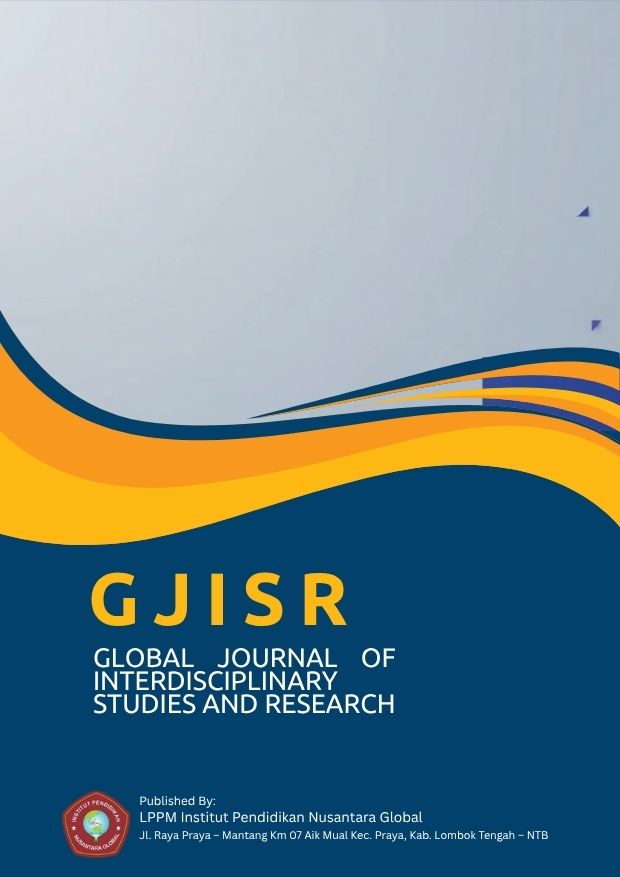
GJISR: Global Journal of Interdisciplinary Studies and Research
Frequency: 4 issues per year (February, May, August, November)
E-ISSN: XXXXXX
1. Educational Sciences and Interdisciplinary Education
Educational theory, philosophy of education, sociology of education, educational psychology, learning sciences, comparative education, educational research, educational innovation, interdisciplinary learning, educational transformation, lifelong learning, and the relationships between education, society, culture, and human development.
2. Curriculum Development, Pedagogy, and Learning Innovation
Curriculum design and reform, instructional strategies, pedagogical innovation, andragogy, heutagogy, project-based learning, problem-based learning, inquiry-based learning, experiential education, competency-based education, differentiated instruction, assessment-informed teaching, and the integration of disciplinary knowledge into educational practice.
3. Educational Technology, Artificial Intelligence, and Digital Transformation
Artificial intelligence in education, machine learning applications, digital learning environments, online and blended learning, learning management systems, educational data analytics, adaptive learning, immersive technologies, virtual and augmented reality, educational robotics, digital literacy, computational thinking, and the ethical, social, and pedagogical implications of emerging technologies.
4. Educational Leadership, Governance, and Institutional Development
Educational management, school leadership, university governance, strategic planning, organizational behavior, institutional culture, educational financing, quality assurance, accreditation, educational entrepreneurship, institutional innovation, policy implementation, and the relationship between educational governance and institutional performance.
5. Teacher Education, Professional Development, and Human Capital
Teacher preparation, professional identity, pedagogical competence, teacher leadership, continuing professional development, educator well-being, professional learning communities, educational workforce development, digital competencies, human capital formation, and the transformation of teaching professions in response to technological and societal change.
6. Educational Assessment, Measurement, and Research Methodology
Educational measurement, psychometrics, formative and summative assessment, authentic assessment, instrument development and validation, learning analytics, program evaluation, mixed-methods research, experimental and quasi-experimental designs, longitudinal studies, research synthesis, and methodological innovations in interdisciplinary educational research.
7. Educational Psychology, Cognitive Science, and Human Development
Cognitive development, motivation, metacognition, emotional intelligence, social-emotional learning, behavioral science, neuroscience-informed education, human development, student engagement, resilience, mental well-being in educational settings, and the interaction between individual characteristics, learning environments, and educational outcomes.
8. Inclusive Education, Social Equity, and Educational Access
Inclusive pedagogy, special and differentiated education, disability and accessibility, gender equity, multicultural education, linguistic diversity, educational marginalization, social mobility, digital inequality, educational rights, and interdisciplinary strategies for improving access, participation, retention, and achievement across diverse populations.
9. Science, Technology, Engineering, Arts, and Mathematics Education
STEM and STEAM education, mathematics education, science education, engineering pedagogy, scientific literacy, environmental literacy, computational education, laboratory-based learning, interdisciplinary problem-solving, innovation-oriented learning, and the development of scientific and technological competencies across educational levels.
10. Social Sciences, Humanities, and Cultural Studies
Sociology, anthropology, political science, history, philosophy, linguistics, literature, communication, media studies, cultural studies, religious studies, and humanistic inquiry. The journal welcomes research examining the relationships between these disciplines and education, technological change, social transformation, cultural identity, and contemporary global challenges.
11. Economics, Business, Management, and Educational Development
Applied economics, educational economics, entrepreneurship, management, organizational innovation, financial literacy, human resource development, labor market transformation, the economics of technology, digital business models, productivity, and the relationships among education, innovation, employment, and economic development.
12. Artificial Intelligence, Data Science, Engineering, and Applied Sciences
Artificial intelligence, data science, computational modeling, information systems, software engineering, cybersecurity, robotics, automation, materials science, applied physics, biotechnology, and other emerging scientific and technological fields. Contributions examining the applications, governance, ethics, and societal implications of these developments are particularly encouraged.
13. Environmental Sustainability, Climate Resilience, and Ecological Systems
Environmental education, climate change adaptation, ecological literacy, sustainability science, circular economy, environmental governance, renewable energy, sustainable agriculture, biodiversity conservation, waste management, and socio-ecological systems. GJISR encourages interdisciplinary research connecting scientific knowledge, education, policy, technology, and community behavior to environmental sustainability.
14. Health Sciences, Public Health, and Bioethics
Public health, health education, health literacy, digital health, biomedical innovation, environmental health, health informatics, bioethics, behavioral health, preventive interventions, and the ethical and social implications of scientific advances. Research integrating health sciences with education, technology, policy, or human development is particularly welcome.
15. Public Policy, Governance, and Institutional Systems
Public administration, public policy analysis, digital governance, institutional adaptation, regulatory innovation, policy evaluation, global risk management, political institutions, public service innovation, social accountability, and interdisciplinary approaches to addressing complex governance challenges.
16. Religion, Ethics, Philosophy, and Knowledge Integration
Religious thought, philosophical inquiry, ethics, epistemology, scientific knowledge, moral reasoning, values-based education, interreligious studies, and the integration of traditional and contemporary knowledge systems. Contributions may examine the relationships between religious or philosophical perspectives, scientific advancement, educational practice, and social transformation.
17. Communication, Media, Information Literacy, and Digital Society
Digital communication, media literacy, scientific communication, information behavior, misinformation and disinformation, digital citizenship, online communities, human-computer interaction, cross-cultural communication, and the effects of digital media on education, knowledge production, public discourse, and social relationships.
18. Global Development, Comparative Studies, and Sustainable Futures
Globalization, comparative institutional development, international education, sustainable development, demographic change, migration, urban transformation, social innovation, global citizenship, the United Nations Sustainable Development Goals (SDGs), and interdisciplinary responses to interconnected local, national, regional, and global challenges.
∴ ISSN BARCODE ∴
∴ INDEXING ∴
![]() |
![]() |
![]() |
![]() |
∴ TOOLS ∴
![]() |
![]() |
![]() |
![]() |
∴ STATISTIC ∴
∴ MEMBER ∴

GJISR: Global Journal of Interdisciplinary Studies and Research
Frequency: 4 issues per year (February, May, August, November)
E-ISSN: XXXXXX